This was possibly one of the best years that I’ve had in a long time. There were geek things abound, in all facets of life: in literature, film, current events, science, music and people. 2010 was a fantastic year for me. In roughly chronological order, here are the notable geek moments of the year:
This year seems to have been the year for newly-published authors. Nora Jemisin exploded out of the gate with her book The Hundred Thousand Kingdoms, the first of a trilogy in an excellently conceived of world, one where gods and humans interact and where there are consequences for those who were chained, and those who held the chains. I was particularly blown away by this book, and look forward to diving into book two: The Broken Kingdoms sometime in 2011.
Canadian Science Fiction author Peter Watts became a bit of a martyr in the eyes of many in the science fictional world when he was thrown into jail for resisting arrest at a border crossing earlier this spring. News of his imprisonment and the details of his predicament spread like wildfire, spurring outrage. Watts has since been convicted and released, and won’t be able to travel into the U.S..
I trooped in February with the 501st in New York City to support a product launch. What a surreal day: who would have thought of the combination of Star Wars, Snoop Dogg and Adidas?
The long-running UK show Dr. Who saw its latest rejuvenation in the form of Matthew Smith this year, along with show runner Steven Moffat, who’s penned some of the best Dr. Who episodes that I’ve seen in the latest run. I only was able to catch a couple of the new episodes, but what I saw, I really liked.
One of the films that was a sure train wreck from the trailers was Clash of the Titans. It’s decent, mindless monster porn with action and special effects, but for a regular movie? It was pretty bad, and the slapped together 3D helped show audiences that it’s a stunt on the part of movie studios to rake in more money per ticket. Where 2009 saw Avatar as the big bright moment for 3D, 2010 saw that it was only good when natively filmed with the extra dimension, rather than slapped on with additional CGI.
Another new author broke into the ranks of the published, author Blake Charlton, with his first novel, Spellwright. While the novel wasn’t perfect, it was enjoyable, and I’ve had the good fortune to talk extensively with him over the course of the year (while he splits writing time with his medical education). This book in particular draws upon Charlton’s own experiences with Dyslexia, which allows the book a unique feel when it comes to the mechanics of world building and magic. Bring on book two, Spellbound, due out this year. !
One of my favorite authors from high school / camp, Karin Lowachee, returned from several years of absence for a new book titled The Gaslight Dogs, one of the better Steampunk books that I’ve read thus far. Set in an unconventional world to the North, Lowachee weaves together some interesting characters and settings in an entertaining novel. I eagerly await the sequels for this planned trilogy.
Earlier this year marked a major uproar when amazon.com attempted to flex its muscles against Macmillan publishers, who had been pushing for higher prices for its new hardcover books. Amazon pulled the books from the publisher, which outraged a lot of people – authors who found that their books weren’t being sold for a couple of days before they were all put back into place.
April 20th saw a massive explosion on the Deep Water Horizon oil rig when a plume of natural gas came up the well that they were drilling. The resulting oil spill lasted for three months and involved a major engineering and environmental effort to cap and contain the oil spill. Undoubtedly, the effects will be seen for years to come in the environmental and economic health of the region. The containment of the well itself is an achievement in and of itself, with an apt description of the process as similar to the Apollo 13 rescue.
Vermont singer/songwriter Anaïs Mitchell gained quite a lot of attention with her concept album Hadestown, a post-apocalyptic folk opera retelling of the legend of Orpheus. It’s a mouthful, but an extensive cast of notable singers (such as Bon Iver and Ani DeFranco) join her in an impeccable work of music, story and art. This album was absolute perfection.
In July, at the urging of a former college professor, I drove down to ReaderCon, a regional science fiction convention that boasted an impressive list of authors and fans. Unlike most of the conventions that I’ve been to, this was devoted extensively to literature, and while there, I was able to meet a number of authors that I’ve long admired (and learned of there) such as Charles Stross, Allen M. Steele, Elizabeth Hand, Blake Charlton, Paolo Bacigalupi, David Forbes, N.K. Jemisin, and quite a few others. I had an absolute blast this year, and I’m eagerly awaiting the trip next year. Hopefully, I’ll be able to visit some other similar cons this year.
I didn’t catch this until later in the year, but Predators was a film that was released that had been one that I’d wanted to see in theaters. Where the first film was an 80s action film with too much brawn and no brains, this film was a smart, dynamic science fiction thriller, one that vastly improved the franchise. As io9 said, it’s the perfect B movie. I’m inclined to agree.
While it was a sparse year for good genre films, one stood easily out amongst the others: Inception. It was a fantastic balance between action and story, with a thought-provoking storyline that dips its feet into the science fiction pool just as much as needed to push the story forward, exploring the mind and the possibilities of imagination. It’s on my slowly growing list of top science fiction films ever.
1B1T proved that Twitter could be more than mindless, as Wired Magazine ran a poll to see if they could get all of twitter reading the same book. The result? Neil Gaiman’s American Gods, broken down into an easy reading schedule – it made for a great excuse to re-read the book and talk to a number of people on a global scale.
Another new author, Charles Yu impressed me with his short story collection, Third Class Superhero this past spring and doubly so over the summer with his book, How To Live Safely In A Science Fictional Universe, a brilliant time travel story that stands out from most books that I read this year. Yu’s book becomes part of the story itself, and can easily be compared to the works of Douglas Adams with its dry humor.
Last year, Paolo Bacigalupi blew me away with his novel The Windup Girl, and this year, his follow-up YA novel Ship Breaker could easily fit into the same post-oil world. Global warming is rampant, people are exploited, and with that in the background, there’s a very basic and interesting story that pulls the reader through. Bacigalupi’s a guy to watch, and this book demonstrated that he’s no one hit wonder.
Apple launched their new device and product category this year, the iPad, and when a really good deal came through earlier this year, I bought one, something that I wasn’t expecting to do. So far, it’s easily the best thing that I’ve bought all year long. It’s an amazingly good computer, and it works very well with what I’ve long used a computer for, while being more convenient than a laptop. It’s a multi-purpose device that I’ve been able to use extensively over the course of the year, for writing, reading, web work, music and games. For my first Apple early adoption, it’s come off far better than my first iPod.
This year’s Hugo Awards presented a rare event: a tie for Best Novel: Paolo Bacigalupi’s The Windup Girl and China Mieville’s The City and The City (more on that in a moment) both received the award in addition to every other award that they scooped up along the way. (Quite a few!). Moon also picked up the movie award.
The animated Star Wars Clone Wars TV show has been popular, but for me, up and down in quality. The opening episode was impressive, but from everything that I’ve seen beyond that, it’s become an exceedingly boring show. When the ads point to the passage of an arms bill in the Republic senate as the exciting bits, you should probably reevaluate. Hopefully, it’ll get a bit better soon.
When it came to television shows that disappoint, LOST came to an end is year with a finale that ended the show, but one that didn’t wow me like it should have. There was too much lost when it came to possibilities, and it felt more like an ending and an epilogue that wasn’t needed.
Masked is a superhero anthology, featuring a number of authors taking on the super powered and the caped. I’ve yet to finish it, and while I’ve been enjoying most of it, there are only so many stories of a Batman clone before I have to question the need for the story to be included.
One of the better anthologies that I read all year, Stories: All New Tales, edited by Neil Gaiman and Al Sarrantonio is an impressive book that looks to the idea that stories should be things that demand that you turn the page to find out what happens next. This collection of stories, which boasts an impressive list of contributors, is one that I really enjoyed reading through – there’s a bit of every genre here, from science fiction to fantasy to horror to crime fiction. Worth picking through and reading for all of the excellent stories.
Military science fiction stories are fascinating reads – I’ve read a number of them this year, and by far, the most thought-provoking was Adam Robert’s New Model Army. The premise is one that’s very modern: what happens when the wiki-culture moves into warfare? While I think that a lot of what would have happened in the book would never come to pass, it does have some interesting ideas behind it, and by far, was one of the better books that I read all year.
Iron Man 2 would have done well to capitalize on the military science fiction stories that the first was known for: a tight, interesting and well conducted special effects spectacular. The trailers looked awesome, but the film just fell flat: it was overblown, nonsensical at times, and not nearly as good as the first one. It did have its good parts, such as Sam Rockwell’s zany character, and some fun action scenes.
Kirby Krackle completely rocked my world this year. Their sound is pretty basic when it comes to the actual music, but they rocked it pretty well. In a world where there a few songs that are so passionate about Green Lantern or zombies, their album E for Everyone really stood out for me, and it’s an awesome bit of music to bounce around to. These guys are the new voice of fandom.
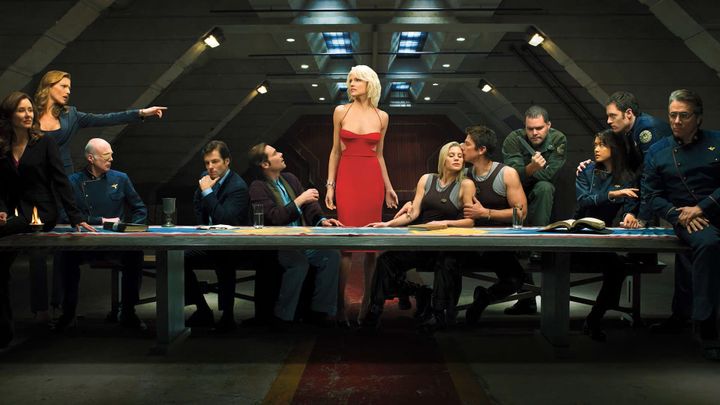
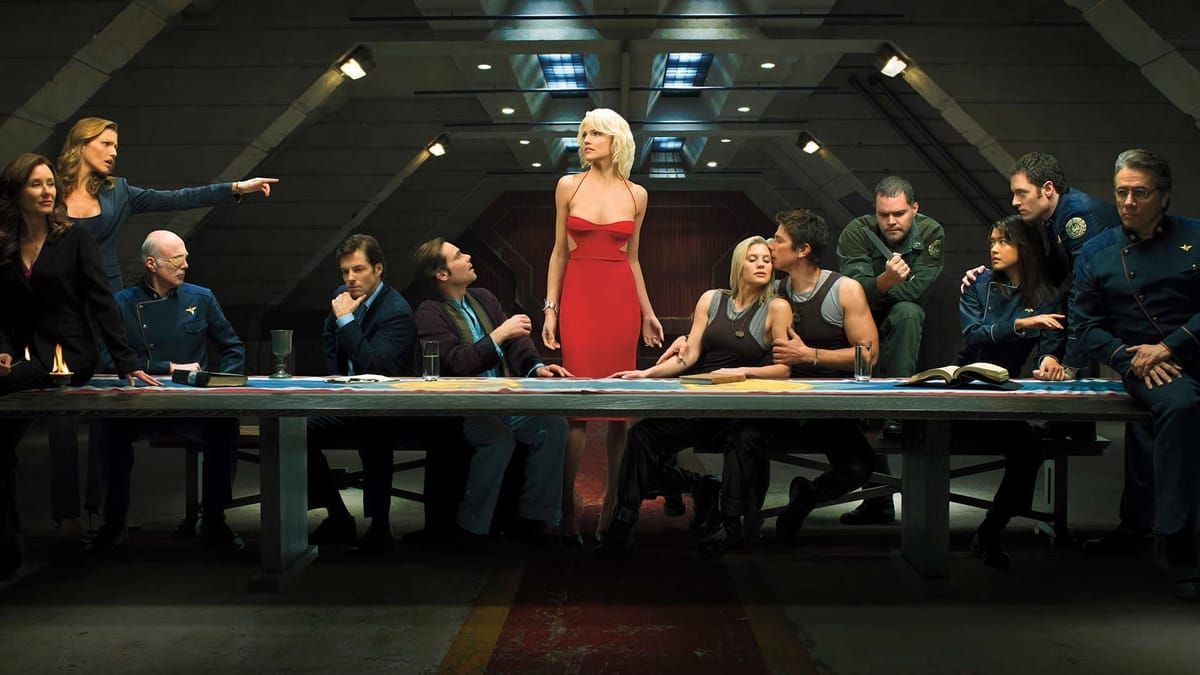
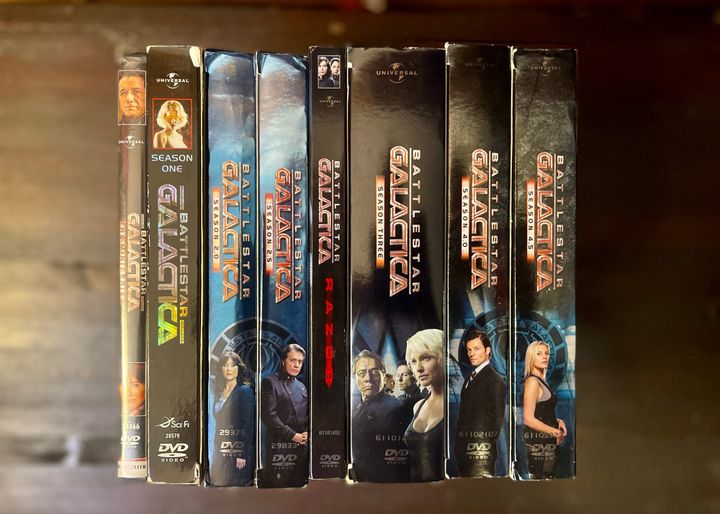
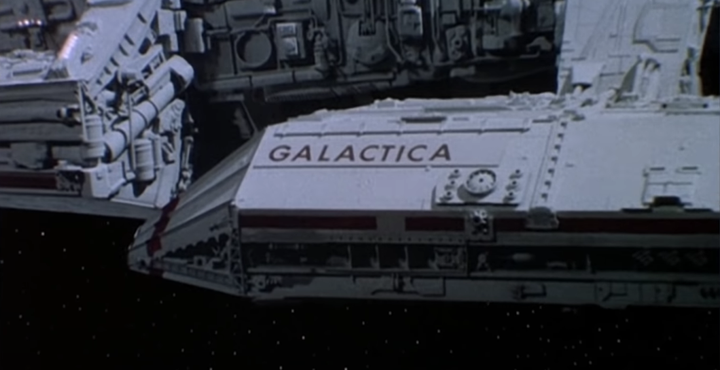
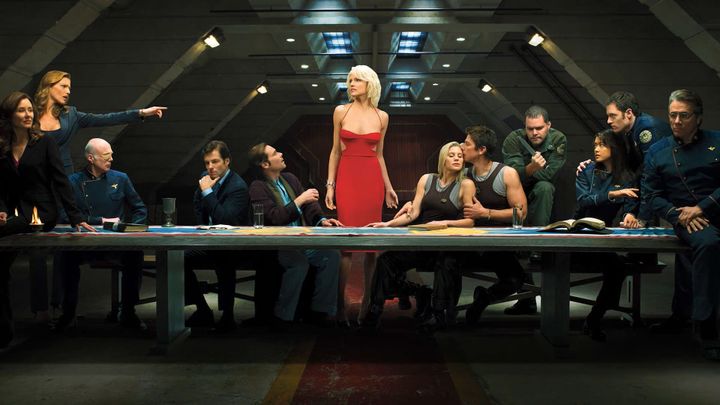
The first big cancellation from SyFy earlier this year was Caprica, which launched with a great cast of characters and a whole lot of potential, this precursor to Battlestar Galactica was a show that really needed to be trimmed down and to find its focus a bit. Numerous storylines, characters and themes all running together worked well, but the writing was on the wall early on: the show could have been just as good or better than BSG, (and was, at points), but its ratings couldn’t sustain it. It’s a real shame: the show could have been better than BSG.
In it’s second season, Stargate Universe continued to impress me, and it’s recent cancellation has me far more upset than the axing of any other television show that I’ve watched (even Firefly, although I saw that post-cancellation). A step up for the franchise as a whole, this season of Universe was brilliant, well acted and had a lot going for it, and I hope that the next ten episodes will see some good closure and storytelling. Still, maybe it’ll be one of those shows that was awesome and never had a chance to get bad, much like Firefly.
One of the absolute best books that I read this year was China Miéville’s The City and The City, which was up for a number of awards this year, including the Hugo. I picked this up after the hype started to go, and it lived up to, and exceeded my expectations by a long margin. Wonderfully plotted in a well thought-out world, Miéville crafts a murder mystery with a fantastic background, and puts to paper one of the best books of the year.
The mathematician who was responsible for some major advances in mathematics and theory died earlier this year, Benoit Mandelbrot. Also the subject of a Jonathan Coulton song: Mandelbrot Set.
Stephen Moffat ruled the Dr. Who universe for a while now, but I liked his take on Sherlock Holmes far more. Set in the modern day, Sherlock is a retelling of the story, with Martin Freeman as Dr. Watson and Benedict Cumberbatch as Sherlock Holmes. A far better take on the character than Robert Downey Jr.’s in the film adaptation (which was also quite fun), Sherlock was fantastic from start to cliff-hanger. I already can’t wait for Series 2.
In the wake of Sherlock, Martin Freeman was selected to play Bilbo Baggins in Peter Jackson’s The Hobbit, which is finally moving forward, along with what looks like a great cast. It’s still a shame that Guillermo del Toro isn’t directing though.
Zombies have been all the rage for a while now, and (no pun intended) have been done to death. The Walking Dead falls into a couple of categories with me. The pilot episode was fantastic – one of the better takes on a man waking up to find civilization gone, but it’s a story that really doesn’t add much to the canon, and while it had its interesting points, it’s something that I’m more or less indifferent to. We’ll see how Season 2 goes.
While Zombies have been very popular, 2010 saw a bit of a decline in the hysteria over Vampires, while Steampunk came in as a solid genre. The Steampunk craze has gotten some major attention: Sherlock Holmes took on a couple of Steampunkish elements, while Richard Castle (Nathan Fillion) in the show Castle became a convert as publishers such as Pyr and Tor have published a number of books in the genre. It’s something that’s here to stay, that’s for sure.
When it comes to Pyr books, one of their offerings for the year that I read earlier this was Ian McDonald’s River of Gods, which took place in a futuristic India. The Dervish House is his latest book, taking place in a futuristic Turkey. I haven’t finished the book yet, but I’m loving its rich attention to culture and interconnected storyline.
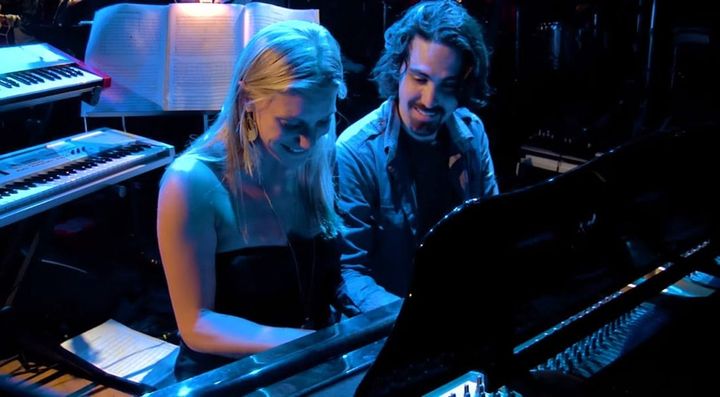
Going back to geek music, a friend of mine, John Anealio, turned me towards Marian Call earlier this year at ReaderCon, and when she came through Vermont on her 49 state tour this year (an impressive feat in and of itself), I was able to catch her at Montpelier’s Langdon Street Cafe for a geeky set of music and a couple of quick words with Marian. She’s a lovely singer, one who’s popular for all of the right reasons. Geek music was something that I focused on quite a bit this year, putting together a playlist that’s almost 700 songs long, and while doing so, came across a strange trend with some of the more higher-profile stuff that trends more towards Geek Pop music. Songs like G33ks and G4m3r Girls by Team Unicorn were almost unlistenable earworms, laundry-lists of popular geek things without the real soul of “geek” stuff to begin with. It’ll be interesting to see if there’s more of it as geek stuff gets more and more popular.
Speaking of John Anealio, he’s someone to keep an eye on, and someone that I befriended earlier this year at ReaderCon. John’s an excellent geek musician, with some fantastic songs released earlier this year, such as ‘Stormtrooper for Halloween’ and ‘I Should Be Writing’. Kirby Krackle might speak for fandom, but Anealio speaks for the fans themselves. I can’t wait to see what he comes up next.
Another outfit to keep an eye out for is Symphony of Science, which continued to release a number of tracks of auto tuned scientists (namely Carl Sagan) with a wonderful collection of music that speaks to science and the wonders of the universe.
One of the films that I’m practically drooling over in anticipation for is Battle: Los Angeles, which can best be described as Independence Day meets Black Hawk Down. The early buzz from San Diego Comic Con was good, and the trailer showed that there was going to be some excellent looking action. The film is due out in March of 2011, and I really hope that it’ll live up to my expectations.
While I panned iFringe when it first came out, but I’ve grown to love it and really rued my words: with Stargate Universe off the air, it’s easily the best science fiction show on TV right now, and while its ratings have dropped and it’s been moved to Friday nights, I’m hoping that the show will continue onwards. This season has seen less of the blood and gore, but has an excellent alternate universe storyline that’s heating up. I can’t wait for new episodes starting up later this week!
One of the coolest things to happen in the realm of space exploration happened was the Deep Impact Probe, launched on 2005 to take a look at the 9P/Tempel comet. The probe released an impactor earlier this year and took a number of high resolution pictures as it passed by and analyzed the impact to see what it was made of.
The other top book of the year was easily Joe Hill’s second novel, Horns, mixing popular culture, horror iconology and religious allegory together in a story that absolutely gripped me and blew me away while I was reading it.
It was a sad day in December when Leslie Nielsen passed away. Airplane is one of my favorite comedies, while Forbidden Planet is easily one of my favorite science fiction films. He will certainly be missed. Right on the heels of Nielsen was Irvin Kershner, who directed the greatest of the Star Wars films, The Empire Strikes Back. It’s a shame that his work was never quite matched with the franchise. Ironically, his film was one of 25 preserved by the Library of Congress’s National Film Registry.
On December 9th, the private space firm SpaceX made history when it launched it’s Falcon 9 rocket into orbit carrying a dragon capsule. It became the first private firm to orbit the earth and safely return, joining a small number of countries who have accomplished the same thing.
When it comes to dragons, a film released this year that I only just caught was How To Train Your Dragon, a great kids film with a fun story and some good graphics. At the same time, I can also recommend Toy Story 3 for many of the same reasons – excellent storytelling and a positive end for that franchise.
Wikileaks occupied most of the news coverage for the last part of the year as they released thousands of diplomatic cables in addition to their leak of classified military dispatches written over the course of the Iraq / Afghanistan war. The leaks demonstrated the power of the internet: and the necessity to keep secrets a bit more secure. Given the lack of ability of the British government to keep track of their own files, I’m surprised that they haven’t been the target of more leaks.
I first saw the original Tron earlier this year in anticipation for Tron: Legacy, and I came out of the theaters with a film that met my expectations. It was a blockbuster that was fun, but it could have been so much more than it was. With Disney working on sequels and a television series, I’m not sure that the franchise is going anywhere, but box office results have been somewhat lax, given all the advanced hype and marketing for the film.
That ends out the year. It’s been an impressive one, and one that marked a couple of milestones for me: I’ve written, talked to, read and watched so much in the speculative fiction genre, and I’m loving the immersion. There’s a long list of people to thank for it: Annalee Newitz, Charlie Jane Anders, John DeNardo, John Anelio, Patrick Hester, Aiden Moher, Blake Charlton, Charles Yu, Paolo Bacigalupi, David Forbes, Jim Ehrman, N.K. Jemisin, John Scalzi, David J. Williams, Christie Yant, John Joseph Adams, Karin Lowachee, Megan Messinger, Bridget McGovern, Brit Mandelo, Scott Eldeman, Blastr, everybody at io9, SF Signal and Tor.com, people who commented and e-mailed me because of what I wrote and everyone who encouraged my writing and reasoning over the year. Most of all, Megan, for everything. It’s been the best year for me to date, and I’m looking forward to an even better 2011.


I, Human, not I, Robot
Published April 27, 2010 Geek Stuff 7 CommentsTags: Alien, Analysis, Arthur C. Clarke, Battlestar Galactica, Bicentennial Man, Blade Runner, Commentary, Ekaterina Sedia, Forbidden Planet, Geek Stuff, Isaac Asimov, Karel Čapek, Literature, post-apocalypse, Ray Bradbury, Robotics, Robots, Science Fiction, Star Wars, Terminator, Wall-E
Looking over my bookshelves, I had a bit of a revelation: there are very few books that really use robots as characters in them. Taking a look, I only see Isaac Asimov’s I, Robot and several additional collections of short stories, a collection of Ray Bradbury stories that contains ‘There Will Come Soft Rains’, a couple of Iain M. Bank’s Culture novels, Arthur C. Clarke’s novel 2001: A Space Odyssey, Ekaterina Sedia’s Alchemy of Stone and maybe a couple of others that I passed over. An additional trio of books: Ambassadors from Earth, Edison’s Eve and Wired For War all represent a significant figure when it comes to real – life robotic systems and theory. However, looking over the movies that I have on my shelves, robotic characters readily come to mind: C-3P0 and R2-D2 from Star Wars, The Terminator from that franchise, Robbie from Forbidden Planet, the replicants from Blade Runner, Ash from Alien, Andrew from Bicentennial Man, Sonny from I, Robot, and so forth.
I have to wonder about this: there is a large gap in recognizable characters between the two mediums, film and literature. Film seems to contain far more in the way of robots, androids and mechs that come to mind, while I have a difficult time remembering the names of some of the characters from some of my absolute favorite science fiction books.
The first element in which film readily becomes the better medium is its visual nature, allowing for elaborate costumes, props and CGI’ed components of metal and plastics that make up what audiences really think about with robotic characters. Some of the most dramatic imagery from science fiction cinema includes robots: C-3P0 and R2 in the hallway of the Tanative IV, The Terminator coming out of the flames, Ash getting his head bashed in, and so forth. Simply put, robotics are more visual, allow for some differences between living characters and their mechanical servants.
The use of the term ‘Robot’ goes back to 1923 (1) with Karel Čapek’s play, Rossum’s Universal Robots, and according to genre historian Adam Roberts, came at a certain time of anti-machinery sentiment with science fiction at the time, with other books, such as with Aldous Huxley’s Brave New World and Olaf Stapledon’s The Last and First Men look to the use of mechanical and scientific processes and as a result, a population that overly depends upon them as something wholly against nature and counter-productive to humanity as a whole: societies are generally dystopic and dehumanize their inhabitants. This somewhat fits with some modern science fiction films, such as the far futures of The Terminator and The Matrix, and even with Wall*E, where an overreliance of machines results in our destruction, or at least an enormous disruption of society. (2) Indeed, Robot comes from the Czech term robota, which translates to servitude.(3)
Indeed, it should come as no surprise that early views towards robotics weren’t necessarily looked at in any sort of favorable light: throughout history, a constant struggle between leaders and those being led has come about, and one lesson that a history teacher (Mr. David Munford, thank you), imparted was the destruction of clocks and machines during one early worker uprising. The use of factories in particular lends itself well to machinery and associated dystopia images and themes. Henry Ford put to good use the assembly line, which relegated skilled labor to fastening single bolts day in and day out. It is particularly ironic that those human workers were in turn replaced by robots who do the same roles for them.
In literature, then, the use of robotics goes far beyond characters, but is typically used as part of a larger theme that a novel is trying to push across to the reader. The Three Laws of Robotics that are central to Isaac Asimov’s robot books are particularly conscious of this fact, and represents some level of paranoia on the part of the human race that at some points, robots will eventually take over humanity because of their inherent strengths over human flesh: stronger, faster, smarter, etc. This makes Asimov’s novels somewhat different from the earlier books with mechanical imagery linked to dystopia: Asimov’s world shows where a fall of society has not occurred because of the indulgences by humans, but generally only because the robots that we’ve essentially created in our own image are just as screwed up as we are. Dystopia, in this case, may be in Asimov’s futures – we certainly see that in his Foundation stories – but for the time being, he views a world with robotics as one where robotics act as a natural counterpart for humanity, rather than a replacement, although the threat, held in place by his three laws, is still there.
In films, however, different elements are brought out: robots are the servants of humanity & associated sentient life in Star Wars, performing vital and specialized tasks while interfacing with their creators. The same goes for the robots in Blade Runner and Wall*E. At other points, they’re used for war, such as in Ron Moore’s Battlestar Galactica, where they then turn on their human creators for a variety of reasons, or under the control of a vast, superhuman intellect, such as in the Terminator franchise. Here, these elements often, but not always, hearken back to a sort of dystopia, where robotics are part of a larger problem: it represents the failure of the human race to continue with its biological need to reproduce, and demonstrates some basic elements of life itself: Darwinism or survival of the fittest. Those that cannot keep up, will be destroyed, or at least overcome.
Within literature, the larger themes of dystopia and robotics are used, with the protagonist generally someone who overcomes the system/society/social norm to relearn what it means to be human, and there is a larger theme of the scientific, mechanical, logical order, represented by robotics, and a more organic, theological, chaos, represented by people. At points, this is represented with some very pointed examples: Ray Bradbury’s ‘There Will Come Soft Rains’, which shows a robotic house living diligently on long after its inhabitants have destroyed themselves. However, the reason that robots themselves seem to be fewer and farther between is because there is an inherent need for this dystopia theme to be present in the film: it represents the weakness of humanity, carries with it religious overtones and two extremely different styles of thinking all wrapped up into a single character, which oftentimes, seems to be difficult to work in or really justify as a regular character in a book that takes just part of the story, especially if they are not the central part of a story. Their existence represents so much in relation to their human counterparts, it would seem almost a waste to have a story with a side character as a robotic entity, rather than fleshing out everything that he/she/it represents.
With movies, these themes are there occasionally, but generally, explosions and violence comes first and foremost in the eyes of paying audience members.
1 – Jeff Prucher, Editor. Brave New Worlds: The Oxford Dictionary of Science Fiction. Oxford University Press, 2007, 164
2 – Adam Roberts. The History of Science Fiction. Palgrave Press, 2005, 159
3 – Ibid, 168