Posts Tagged 'Vermont'

Out of the Ashes: How an Irish Episcopal Priest Saved Norwich University

I’ve sold a new article to the Norwich Record, titled Out of the Ashes: How an Irish Episcopal Priest Saved Norwich University. This was one of the projects that I was working on last fall, and shortly after the start of the New Year, I submitted my final draft. The research phase was interesting: going through archives and piecing together a rather interesting and diverse man that was a central, but forgotten figure in Norwich University and local Vermont history.

When assigned to this project, I was a little skeptical: what exactly were the links between the Episcopal Church and how would something like this be relevant to today’s reader and Norwich alum? After reading up on Bourns, it became clear that there are some interesting things that he has to teach us today.

Out of the Ashes: How an Irish Episcopal Priest Saved Norwich University

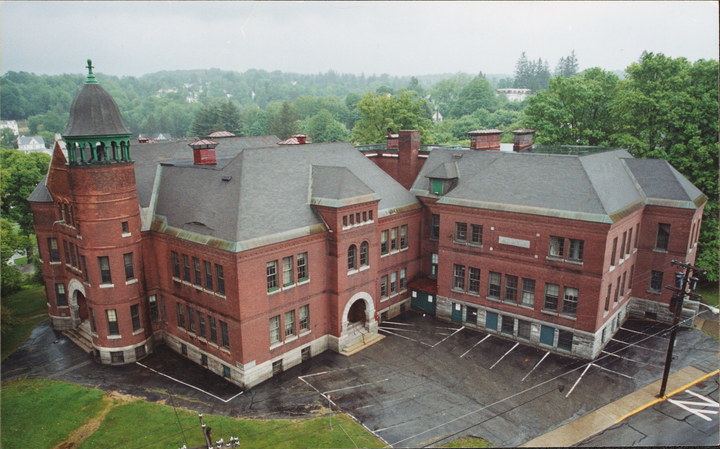
The year 1866 was a pivotal one for Norwich. In March, a fire destroyed the school’s primary building—the Old South Barracks—and the University’s future lay in jeopardy. The disaster represented the biggest challenge to date in Reverend Edward Bourns’ tenure as president, a career that had shepherded the young school through fifteen years of adversity, including hostilities from the citizens of Norwich and Hanover, crippling debt, and four years of civil war. Yet, under the immensely popular Irishman’s steadfast guidance and vision, the University would not only survive, but thrive.

NO ORDINARY MAN

Reverend Edward Bourns was well-equipped to run a college. A learned man, he not only held the office of president, but served on the faculty, teaching ancient languages and moral sciences. An ordained Episcopal priest, he held religious services on Sundays.

The reverend’s lack of military training in no way hindered his leadership abilities. Described by Adelbert Dewey as “a man of peace by profession, better versed in canon law than cannon balls,” he had nevertheless acquired “the swinging stride of the modern soldier.” An insatiable reader renowned for his “incisive and delicate wit,” it became a saying among the cadets “that no one could enter the doctor’s rooms on the briefest of errands and not depart wiser than he came.” An imposing presence at six foot two, Rev. Bourns was respected by all, and perfectly suited—both as a shrewd administrator and genial leader—to steer Norwich safely through perilous times.

Born October 29, 1801, in Dublin, Ireland, Bourns entered Trinity College in 1823, but put his education on hold to serve as a private tutor, completing his degree a decade later. Ellis’ History of Norwich University describes him as “a man of learning and acumen,” and at Dublin he won numerous book prizes for scholastic achievement.

From Dublin he moved to London, where he engaged his skills as a writer and reviewer, working alternately in the publishing industry and as a teacher. In 1837, he journeyed across the Atlantic to the United States, where he became acquainted with a fellow Irishman, the Reverend William DeLaney, Provost of Pennsylvania University. Shortly after, Bourns followed Reverend DeLaney (now the Bishop of Western New York) to Geneva, where he enrolled at Hobart College, earning his MA and becoming an adjunct classics professor. By 1841, having received his LLD from Hobart, he was ordained Deacon of Geneva’s Trinity College. Four years later, after a short stint as a fully ordained priest, Dr. Bourns resigned his professorship at Hobart and left for Brooklyn, N.Y., where he taught ancient languages for five years.


You can read the full article here.

Depictions of History

(Click for a larger version)

War has a universal impact on the world: travel to any town or city on the planet, and you’ll likely find a stone engraved with various wars that the place has witnessed, and the citizens that they lost. We count our experiences by our losses, and I try to make it a point to look at one of the memorials if I happen to go near one. This past weekend, I came across one of the best ones that I’ve ever seen, located in Hardwick, Vermont.

Where most that I’ve seen around Vermont are simple affairs – a polished granite slab, etched with names – Hardwick’s is a fascinating one to behold. The names are carved on the back of five blocks, each depicting five of the conflicts of the 20th century: World War I, World War II, Korea, Vietnam and the Middle East (presumably, the current wars in Iraq / Afghanistan). Each panel holds with it a similar theme: a depiction of their surroundings, the tools with which they used, but most importantly, the profiles of the soldiers who served.

In and of itself, the memorial is an outstanding depiction of the evolution of war in the 20th century, without losing the key focus: those who served and died for their country. The tools of war have changed drastically: rifles were replaced with machine guns, while the aircraft overhead have grown ever more faster, flown higher and have served numerous purposes on the battlefield. The terrain has shifted from the ruins of Europe to those of Iraq, from the Pacific islands to Vietnam and Korea. The people, however, remain constant, faceless.

History begins at the personal level. For all of the major reasons for which a war is fought; Axis aggression in Europe, the spread of communism in Asia, or the threat of state-sponsored terrorism, there is the ground level view from the people who served. What I take out of this memorial is the focus not on the politics and reasons for the war, but for the simple reminder that the people who carried out the will of their country shouldered one hell of a burden. Beyond that simple message, it’s elegantly executed, a visual story that sums up almost a hundred years of military history at a glance, a powerful image to take in.

Memorials are worth taking a look at, connecting to, because the stories of history are literally set in stone here: not the individual stories, but hard data, showing who really paid the ultimate price, and when.

The Aftermath

This past weekend, I was able to volunteer in both Waterbury and Moretown, two towns that are struggling with the floods. The aftermath was heartbreaking. My hometown was inundated with upwards of 7 feet of flood waters in places, and many other communities around the state were under water, with roads flooded, houses swept away, and businesses destroyed.

On Saturday, I drove a group of Norwich University students out to Waterbury, where they worked on one of the streets hardest hit by the rising waters, which took out a number of places in the downtown areas of town, including one of my favorite Pubs, the Alchemist, and a number of state administrative buildings. While I’d seen a number of pictures, videos and driven up and down several roads up and down the Northfield area, nothing prepared me for what I saw in Waterbury: houses with their entire contents in the front lawn, silt baking on their surfaces. Mud and dust filled the air: everyone wore a mask, gloves, heavy boots, and clothes smeared with grime. The scene changed as I drove back out of the village, and onto the interstate: everything was green and untouched.

Sunday marked a work day. I’d driven through the day before, over patched up dirt roads, and into town. The scene was even more striking. Descending into the village, we passed a sign: “All routes in and out of town closed.” Moretown was covered in a fine layer of dust, kicked up from the cars that passed up and down Rt. 100 B. Driving through town, we saw where the bridge into town had been washed out at one end, over a narrow chasm of rock that was still saw the Mad River rushing below it. Megan and I signed in, and helped wash one man’s house before moving on to another, which had seen a couple of feet of water in the main parts of the house. Tearing up the floorboards, I was struck by two things: no matter how secure we see, nature can really disrupt our everyday lives, and that I was tearing up a gorgeous hardwood floor, and the home’s owner was smiling. It was astonishing.

A pack of volunteers had converged on the house: groups of two were pulling up the floor, sweeping up the dust and river muck that had collected under it, and pulled out the nails. Bathroom tiles shattered, sheetrock was removed, pipes stripped out, as we sweated in the dust. It was a rewarding couple of hours of work: by the end of the couple of hours, the floor had been removed, swept and free of nails, while others outside were salvaging what they could of the wood we pulled up and out. Fortunately, they seem to have had flood insurance.

The attitude of Vermonters in the aftermath of the flood has been the most remarkable thing to have come out of the disaster. Everywhere, people were enthusiastic, ready to work, ready to volunteer, and ready to rebuild. Despite the dust, the mud, the destroyed roads, washed out riverbanks, bridges and fields, the people of Vermont have shown that they’re resilient, tough and as a whole, strong. While disasters such as these are horrifying in the damage, they’re welcome in only that they can demonstrate the unity that they invoke from the community. Their roads and homes might be broken, but not the people.

On Hype

The story this morning amongst a lot of the news outlets this morning are questioning whether or not Hurricane Irene was overhyped or not: much was made of the dangers of the storm, prompting massive evacuations from all along the eastern seaboard. The storm did dissapate quite a bit as it moved up the coast, downgrading to a tropical storm by the time that it reached New England, but where the storm lost wind, it made up for it in rainfall.

Earlier this spring, Vermont experienced some horrific floods following a wet spring: entire towns found themselves under water. Once again, flooding returned to Vermont, in what people are comparing to the epic floods of 1927, which killed numerous people and destroyed countless bridges. Driving around Vermont, look at the years in which they were build: many were built in 1927 or 1928: replacements.

This storm wasn’t overhyped, nor should we think that there’s any greater danger in overhyping a storm of this type.

The pictures from around the state are scary: my hometown of Moretown is under feet of water from the Mad River, Brattleboro is covered, and with houses and bridges swept away by the floods. People and resources were prepared, and a single person was swept away last night, with around twenty fatalities all told. Considering the population density of the Eastern seaboard, that’s a remarkable figure: had there been no evacuations or preparation, that number would surely rise.

It’s easy to prepare for the worst: it’s much harder if you’re caught unawares. Overhyped? Not for Vermont: we’ll be cleaning out and rebuilding out for weeks, if not months.

Random Things

The iPad 2 was unveiled the other day by a skeletal Steve Jobs. It looks neat, and it’s clearly designed to entice the next crop of people who held off on the first one. Faster, slightly different shape, new cover, etc. They’ve got a good product, and I suspect that anyone who’s waited a little while will be happy that they did.

That being said, I’m not planning on upgrading mine for, well, ever. It’s a fantastic product (and I’m decidedly not an Apple fanboy) that I’ve gotten a lot of use out of since I got mine 8 months ago. I do a lot of writing on mine, and I’ve been happy that it’s an all around general computer that does pretty much everything I want it to. I don’t do a lot of web browsing on it, but when I have, I’ve generally been pleased. (My one complaint is Safari’s insistence on updating every single open tab when there’s a couple open. It’s annoying). Writing is fantastic, and as predicted, I’ve gotten better at writing on the screen. Moreover, I use the calendar a LOT. Since I take the thing everywhere, I’ve gotten into the habit of writing down dates, something that I’ve typically never done, and it’s nice to have a reminder when I need to be somewhere.

Plus, game developers are starting to get in on the platform, and there have been some very cool games over the past couple of months that I’ve gotten hooked on. There’s the obligitory Angry Birds obsession, and I’ve found two other games lately, Battleheart and Canabalt, that I’ve really enjoyed. Battleheart is a fun cross between World of Warcraft and D&D, which appeals to my geek sensibilities, and Canabalt is a game that’s stupidly simple, and stupidly addicting (running and jumping over gaps on a roof).

I’ve been reading more books on the device as well, mainly late at night, when I don’t want to turn on a light and keep Megan up. It’s not something that I read a lot – I’m currently reviewing Embedded, by Dan Abnett for SF Signal, and between late night reading sessions, I typically pull out my other book, Kraken, which I’ve got in hardcopy.

I also haven’t upgraded my iPad since I got it – it’s still on the original iOS system, which I’m content with. I’m not particularly won over by the introduction of folders, or the removal of the lock switch (which I really like having). It was fine when I got it, and I’m still pleased with the purchase.

I’ve had the pleasure of writing for the website Blastr a number of times over the past couple of months (the articles that I’ve written are linked in the ‘Writing’ tab here), coming up with lists on all sorts of things when it comes to science fiction. It’s fun to relate what we love to read and watch to current events or to pick apart a franchise for things, and while it’s not particularly smart writing, it’s fun writing, and I’m really enjoying delving into a topic and finding a wide range of things.

By far, my favorite one to write thus far has been the ‘83 Crazy Differences Between Fringe’s Alternative Universe and Ours‘ piece, which allowed me to look at one of my favorite shows, Fringe. There have been a couple of things added, and if the show goes on, I’m sure that we’ll be able to add an update to it at some point.

Lists by themselves are meaningless, I think: the usual top ten or top one hundred lists of the ‘best’ and ‘favorite’ types are always so contingent on people’s individual tastes – and they fall into either the list of safe choices, where few people can argue about the selections, or a bunch of obscure or other ones that gets people arguing about everything that wasn’t on the list. It’s frustrating to read comments, I’m finding, because people either don’t read the article and think about it, or read it and ignore what you’re trying to put forward.

Such is life. I’ve got a couple of lists that I’m working on, and I’m excited about what’s to come.

Last year, a friend of mine and I started up a website called Geek Mountain State (a play off of Green Mountain State), designed as a catch all for all things geek in Vermont. So far, it’s been quite a lot of fun to write for. The idea for the site goes back to 2009, when I was driving out to Middlebury for a talk by author P.W. Singer, who wrote a book called Wired For War, (I wrote a review for the book for io9, here, and interviewed Mr. Singer, here.) an examination of robotics in the battlefield. It struck me that there were probably more talks like that around the state. Over a year and a half later, I’ve heard more and more about all types of science and technology news, commentary on the future, politics, geeky events and things along those lines throughout the state, and after speaking with a friend of mine, we decided that the idea had merit, and we decided to launch a blog, along with a Twitter and Facebook feed, to capture these sorts of things happening around the state.

Looking at almost 30 other websites, we’ve been able to update a daily list of events happening throughout the state that relate to geek interests, either in the typical geek interest levels, such as science and technology, but also gaming and book signings, while we prowl through Flickr and online for photos of niche things that catch our interest: ruins, wind farms, bookstores, and quite a lot more, along with blurbs and links to articles that fall under the same heading, as well as short pieces that I’ll put together.

The site’s not quite where I want it yet – I’d love to see a larger audience (it’s certainly growing though), and eventually, our own domain that we can maintain ourselves. We’ve got some ideas that we’ll implement as time goes on – I’d love to begin interviewing people in all walks of geek life, get some more original articles, new writers, and monetize the site on a local level, for local businesses, but some of that is pretty far down the line. Eventually, I’d love to get to the point where we can solicit and commission local science fiction and fantasy (and pay people to do it!), but I don’t know how to get there yet. Personally, I’d love to see an anthology of local speculative fiction, by local people – that would be beyond cool.

A Stranger’s Gift

I have one particular addiction: books. There’s very little that I don’t like about them, from an orderly line of them occupying a shelf, the heft and weight, to their universal format that allows them to be accessed by everyone. (That sounds like a dig against eBooks, but it’s not). Inevitably, when I am drawn to a bookstore, I end up with a couple volumes that caught my eye under my arm as I leave the store.

This happen earlier today after a late lunch when Megan and I wandered back home. A local store, The Book Garden, is holding a sale for their used books, buy one, get another free. I’ve picked through the store pretty well, and I’m always happy to see that they’ve got a replenished collection every time that I go in. This particular trip, I found that they had a pair of Harry Potter novels, The Sorcerer’s Stone and The Deathly Hollows, neither of which I had, and both in hardcover. I’ve bee working to get all of the book for my own collection (in hardcover), and used bookstores usually have a couple of them, I picked up the pair, intending on adding them to my collection (with just a couple of others (Books 4 and 6) left to pick up after that before I had the entire set.

The books bagged, We walked home along Barre St, where we came across a trio of children playing on the sidewalk. The three of them were bundled up against the cold, but looked like they were having fun. They spread out across the sidewalk and a demanded a password to cross, giggling. Megan guessed Cat (or Kat, they said it began with K) and I guessed people for mine, and they allowed us to pass. One little girl said that she could read the sign on the side of the truck parked across the road, and read it for me.

Impulsively, I asked them if they liked to read. Her dark face lit up with a wide grin and nodded. I pulled one of the books out of my bag, The Sorcerer’s Stone and handed it to them, asking if they wanted it. They took it out of my hand and look even more excited, and ran inside. I overheard the brother tell his mother that a ‘nice man gave us Harry Potter!’ as we walked by their apartment’s door. I hope that the mother’s reaction wasn’t that her children had just been given a book by a stranger, and throw it away or forbid them to read it, but accept it in the spirit that it was given: impulsively, with the intention that they will read a fun children’s story, one that I greatly enjoyed as a youngster. Their excitement was tangible, and he way that their faces lit up gives me some hope that the book will be enjoyed (maybe in a couple of years, or hours).

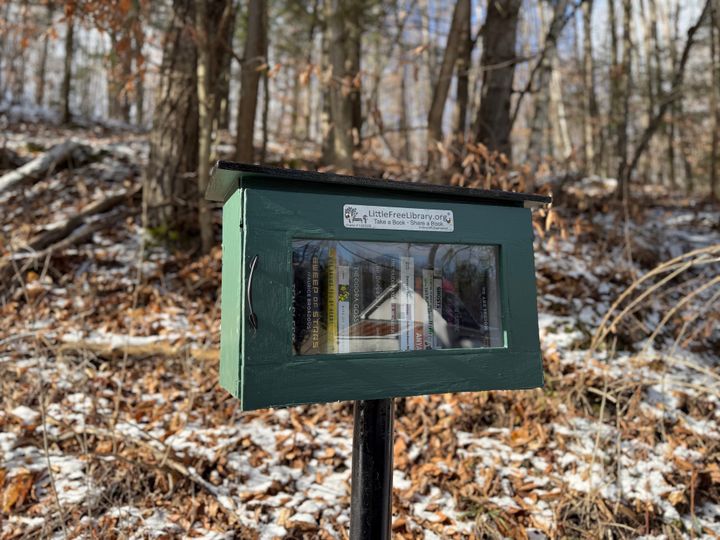
Books, I think, should be given out more freely, and their use encouraged in the instances when that’s not possible. It’s certainly something that I’d like to do more, and I wonder if i should start picking up books that would appeal to children and find some way to distribute them to those in need. Reading is important, essential, and some of the stories that I’ve heard from family members and significant others about the abilities of children in the school systems, I’m worried about some of them. Hopefully, I’ve inspired a couple of kids that reading can be, well, magical, interesting, and exciting.

Vote

I’m not voting for Brian Dubie today. I can’t say that I’m terribly enthused for voting for his opponent, Peter Shumlin, because the prospect of a unified House, Senate and Governor in the state also isn’t all that terribly appealing to me. However, that fear isn’t outweighed by the fear of not a Republican in the office again, but by an incompetent one.

When I graduated from Norwich, our speaker was Mr. Dubie, a life-long Vermonter and member of the Vermont Air National Guard (where he’s earned the Meritorious Service Medal with an Oak Leaf Clusters for his actions during September 11th and Hurricane Katrina), and serves as a pilot for American Airlines and is a co-owner of the Dubie Family Maple Orchard here in Vermont. In addition, he has been Vermont’s Lt. Governor for four terms. He first won his office against Peter Shumlin in 2002. I’m a little surprised that we haven’t seen this come up yet in the campaign.

The gubernatorial race for Vermont has been an exceedingly negative one, and highlights the worst in both parties. The Democratic side ran five candidates for governor, and engaged in recount that cost them two weeks against Dubie, who ran unopposed. I didn’t bother voting for any of the candidates, because they were all essentially shilling the same message: Expanded healthcare, close down Vermont Yankee, and revitalize jobs in the state. Dubie has firmly remained behind building jobs, and has stubbornly refused to move off of that message. As soon as Shumlin entered the race, the gloves came off, and both sides have attacked one another mercilessly. I’m very, very glad that I don’t watch TV or listen to radio with commercials very much.

My impressions of Dubie, however, don’t come from his service, but from how he seems to work, it was from the speech that he gave at my graduation last year. Clearly already thinking of running for Governor, the talk was a bloated, incoherent talk about Dubie, and how he was someone who shot from the hip and talked down Cuban diplomats. Coming out of a program that emphasized writing and organization as a way to convey a clear and concise message to your audience, it was disheartening, at best, to see someone talk for an extended amount of time with absolutely no point or moral to what he was saying. If someone can’t organize (or make the point to organize) what they are saying to a group of people, how can they be expected to run a state with the same level of organization?

Fundamentally, I disagree with some of what Dubie says and on what he has been campaigning for. I dislike him as a person, his approach to doing things, and his attitude towards his responsibilities. I don’t disagree on how jobs are important to the state, but they’re not the only thing that occupies the public’s attention or interest. As such, I see anyone who wants to focus only on one issue as being narrow minded, and I do question their ability to react to changes in the script. Jobs in the state will change, and demand attention, but at the same time, other issues are important to Vermonters. Similarly, I don’t believe that wielding a knife and making extensive cuts to the state will Vermonters; a more nuanced approach to the issue (a series of cuts and strategic spending choices) is required, and Dubie’s already shown that he’s not a nuanced person. (Of course, neither is Shumlin, but I see him as recognizing the spending and cutting issue a bit better than Dubie).

When it comes to the political spectrum as a whole, I’m at a loss. I don’t believe that either party has my interests at heart, beyond their own interests in beating back the other side. I want to vote as a Republican, because I believe that spending needs to be reined in to a more appropriate level, and that the level of national government needs to be scaled back. Over the course of my studies, I became a big fan of President Eisenhower and his policies in the 1950s. I’d like to see that again. I want to vote Democratic, because I believe that the Federal government has a duty to protect the people under it, from outside sources and from one another.

I won’t vote for the Republican side of the house in general because their calls for lowered spending sounds hollow to me: they are the people who took a surplus and turned it into a major deficit. They’re the ones who have denied people equal status in the law, and have frequently sought to vilify those who don’t deserve it, while engaging in a massive war that seemingly has no end (to combat operations AND finances).

I don’t want to vote for the Democrats because they can’t seem to understand that we can’t continue to place out future on a credit card, that they characterize the right as a group of racist, warmongering and homophobic bigots who will turn the country into a wasteland, and that they can’t seem to get a cohesive message and agenda together that they can communicate.

I for one believe that the social messages come first and foremost, with finances as a close second. For this reason, Shumlin’s getting my vote – I hope that he can fulfill his image of being socially liberal and financially conservative and working to make a balance between party line and the real needs of the state. I hope that he can keep spending under a bit of control in these troubled times, that he can effectively manage and replace Vermont Yankee, ensure that no more jobs are lost in the state, that we don’t take a step back in the rights for individuals and so much more. I hope, because I have no way of trusting my elected officials any more. I hope that changes.

Marian Call

Earlier this year, I met up with a friend, John Anealio, who at one point, said: “If you like what I’ve done, have you heard about Marian Call?” I hadn’t, and soon thereafter, looked her up. Marian Call, a singer-songwriter out of Anchorage Alaska, has embarked on a 50 state tour, largely with the support of her fans. Last night, she popped in to Montpelier Vermont, and I was finally able to listen to her live, after listening to a couple of her albums and following her exploits on twitter.

If you haven’t seen or heard of Marian, you should do yourself a favor, and check her music out. As I’ve gotten more interested in geek music, her name comes up with some of the real rock stars of the genre: Jonathan Coulton, Paul and Storm and w00tstock, and it’s clear that she’s on an upward trend when it comes to this sort of music. Judging from the article on Wired that John Anealio posted recently, it’s clear that she’s really done a good job in her own self-promotion by visiting each state. (There’s just a couple more left in the tour)

The nice thing about Marian is that her music doesn’t just cater to the geek community, unlike artists like Anealio, Coulton and Paul & Storm, who’s music doesn’t stray out too much beyond the boundaries. Over some of her albums, she’s got songs like Ave Maria, Flying Feels Like (about a dislike of flying), Love and Harmony (about Karyoke), Ancorage (about the Alaskan City, alongside songs like Dark Dark Eyes, It’s Good to Have Jayne On Your Side and Vera Flew the Coop, all inspired by the TV show Firefly, as well as the fantastic song I’ll Still Be a Geek After Nobody Thinks It’s Chic (The Nerd Anthem). In that, her songs are display a measure of subtlty, and even if you’re listening to some of the more obvious geek songs, it’s not as obvious as songs like ‘It’s Going to be the Future Soon‘ or ‘A Stormtrooper for Halloween‘. (No digs at the aforementioned artists)

In person, I arrived at Montpelier’s Langdon St. Cafe unsure of what to expect. What surprised me the most was that Marian, largely unsupported, still has a voice, and in person, she’s a stunning performer, and her songs were just as impressive live as through my headphones. Very clear, very strong, and very dynamic, all at the same time. The show was certainly a memorable one, and it was a pleasure to meet Ms. Call as she worked the room during her short intermission – it’s always a pleasure to speak with artists directly, and as Anealio says, she’s the real deal. Hopefully, we’ll see Marian back in the state at some point in the near future (she noted several times at how much she liked the state) for another great set.

If you haven’t seen her yet, you should really check out her music, or check in with her website to see where she’s playing next. It’s well worth your time.

Spam, Spam, Spam

On Tuesday, my parents took Megan and I out to see Spamalot, the musical based off of the fantastic Monty Python and the Holy Grail. It’s something that I’ve seen before, when I was in London, in 2007, and when the production reached Boston a year later. Even three times in, it’s still an absolutely hilarious musical, and one of the joys was watching my parents and Megan watch it for the first time.

One of the things that I’ve long appreciated from the musical and soundtrack is at how well the musical relates to the rest of the Monty Python canon. References were numerous in the songs, and it’s delightful to hear references from not only the other films (Always Look on the Bright Side of Life is possibly the most obvious) but smaller references to the Flying Circus pop up frequently in the dialog and lyrics. A couple that I heard this time around were from the Parrot Sketch and the Lumberjack song, as well as a bunch of regular popular culture references, such as a Lady Gaga riff, as well as shots at Britney Spears, Michael Moore, and Burlington Mayor Bob Kiss.

What has long impressed me with the series is how it’s retained the defining characteristic of the Pythons to look at popular culture and find the humor in it – there are very few groups out there that can do that – and the productions that Monty Python put together thrived on going right up to the edge when it came to humor. It was funny, but it was also incredibly thoughtful, and has an edge to it that makes a lot of their sketches timeless. Spamalot is very much the same. At the risk of putting off the hand that feeds them, the creators do a couple great numbers: ‘You Won’t Succeed on Broadway if you Don’t Have Any Jews’ and ‘The Song That Goes Like This’ that are satirical of the formulas in Broadway, which had the audience roaring on Tuesday night. At the same time, I’m waiting for the Seven Days to miss the point by pointing out how politically incorrect the show is.

Humor is something that’s tricky. My mother can’t stand Rusty Dewees aka ‘The Logger’ (For those out of State), because of his character and the style of comedy that he does, as a highly stereotypical Vermont redneck. I can’t get enough of the guy. Comedy, I think, should offend to the core – it’s a long style that goes way back to the roots of comedy. Laughter is often the best thing to get people not only interested in something, but realizing at how ridiculous some of the stands people take on any sorts of issues.

The big thing in the news over the past couple of weeks has been the issue of bullying and high profile suicides of six gay youths who were ousted. I can’t help but think back to the line in the musical: “Just think Herbert, in a thousand years, this will still be controversial.” This issue probably will be. Hopefully, people will eventually take the stance that the Pythons seem to have run with: life is ridiculous, and it’s probably best not to take things too seriously.

The Green Mountain Parkway and Vermont’s Future

I heard a ridiculous commentary on the radio on the drive in this morning. As I cut through the hills between Montpelier and Northfield on Route 12, I listened to a comparison between the Green Mountain Parkway and a road that has been proposed in Tanzania, which would cut across the Serengeti.

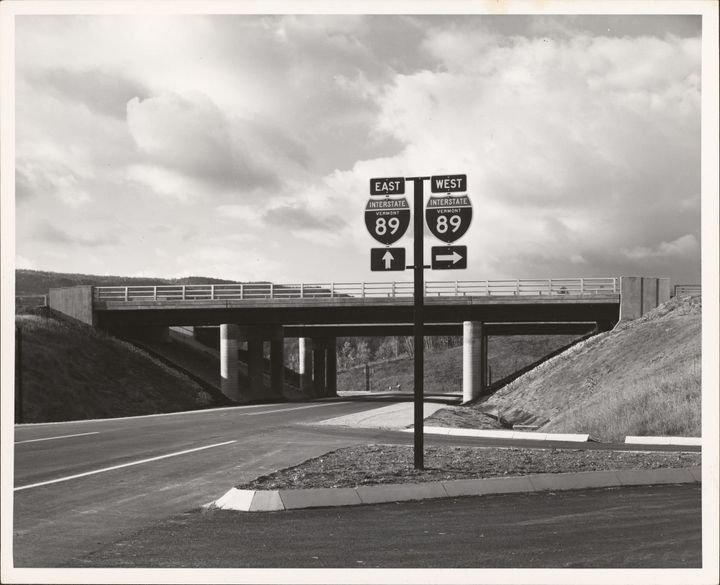
In 1931, a highway was proposed the length of the state, similarly to the Blue Ridge Parkway in Virginia and North Carolina, and had the backing from various federal and state officials, while it was opposed by groups such as the Green Mountain Club. With a couple years of intense debate, the state voted in 1935, with the proposal failing in the House of Representatives, and going down again on town meeting date in 1936. Since then, the state has remained with two segments of highway: I-89, which cuts across West Lebanon and winds its way up towards Canada, travelling through Montpelier and Burlington on the way, while I-91 comes up from Massachusetts and shoots to the north. The Green Mountain parkway would have begun at the bottom of the state at Massachusetts and worked its way up through the middle of the state, connecting the western part of Vermont a bit more efficiently to New York and its namesake city.

I for one, would like to imagine what the state might have been like had the road been built. The 260 mile highway would have likely brought a number of needed jobs to the state during the Great Depression, and would have provided a massive infrastructure base for the future of the state. As the road never progressed beyond the planning state, we’ll never know for sure, but after seeing the state have its own issues over the last couple of years, I would have imagined that such a project would have been heplful in the present day. The major population center, Burlington, is serviced by a small international airport (it goes to Canada), but is otherwise difficult to reach because of the lack of direct flights beyond some of the hubs, while reaching Burlington from somewhere like New York City by car means that someone has to drive up through Connecticut, Massachusetts and across the state in order to reach or, or up through New York and over some of the slower state highways. The short version is, it’s not a quick trip.

Currently, the state has a difficult time retaining businesses. Companies such as Ben & Jerry’s has remained in the state, but with most of its operations outsourced to other states or countries where regulations are a bit more lax. Burton Snowboards has relocated to Switzerland, and years ago, Mad River Canoe relocated away from its namesake Mad River Valley years ago. IBM has downsized some positions, and there have been rumblings that the company might leave at some point in the future, while a major startup, Dealer.com might put its expanding workforce in another state. It’s difficult to grow a business here in the state, because of the location (NeW England is somewhat remote anyway), climate and terrain (Cold and mountainous) and its regulatory nature (fairly strict, geared towards preserving the state’s image – Not a bad thing). One less avenue for transit is just one more thing against the state’s own economy growing.

The reason, Dennis Delaney notes, is that the state would have destroyed a key part of the state’s environment and natural beauty in order to make life easier for people. It’s an easy enough reason to understand, and something that I support. I love how rural the state is, that its resisted the growth and population that New Hampshire (a state of similar proportions) boasts and that I can look up into the sky to see the stars without an incredible amount of light pollution. That being said, all of those benefits are able to be enjoyed because I’m employed and can enjoy Vermont for what it is, as well as the major source of income that comes from tourist dollars to see the state as it is.

What really gets me annoyed is Delaney’s assertion that while infrastructure in Africa would likely help poverty (my understanding is that roads are bad, and much needed) in the continent, this major road project is something that should be shot down because it will harm the beauty of Africa, and the Serengeti. I can understand that to a point, but I would have to ask: how much does beauty compare to the human cost of poverty in the continent, and does the cost of keeping the African wilderness absolutely and completely pristine balance that? I’m not suggesting that the entire region be bulldozed and paved over, nor do I think that Western values will solve all of the problems overseas as a concerned liberal. Natural surroundings are important, should be preserved and protected, intensely. But at the same time, I believe that if there is something that can be done that will positively benefit the lives of people who have very little, it should be done, but it should be done intelligently. Create a roadway that will minimize the impact on the environment, put together protections for the herds that will travel across the road, create an engineering and technical marvel that will leave the road suspended tens of feet in the air.

I have heard the same arguments recently in the state (and out of state) when it comes to wind power farms that could reduce, in part, our dependence on energy technologies that are truly destructive, such as the failing Vermont Yankee Nuclear Power Plant or coal plants that leaves us with acid rain in the hills. People place the intrinsic beauty of their surroundings over projects that are likely essential to the growth of the state and that support the well-being of its citizens. The alternative could very well be something that would be far worse to see: a coal fired plant in Vermont? The expanding slums of a city? How about a state that is forced into further economic problems because it cannot retain a profitable base that would ultimately help the state and its people?

I, for one, do care about the environment of the state, as contrary as it seems to what I just said. However, one needs to be fairly realistic as how we interact with our surroundings, and realize in just what state we can enjoy Vermont’s natural beauty. I for one don’t believe that the state has to be abandoned and undeveloped to retain the mountains and forests of the state. We just need to be mindful of how everything fits together. Personally, I would have been interested to see a Green Mountain Parkway weaving its way up through the mountains: I-89 is already a gorgeous drive, and that doesn’t really take away from the beauty of the state as a whole. It certainly allows me access to the beauty of the state.


“When ships to sail the void between the stars have been invented, there will also be men who come forward to sail those ships.” -Johannes Kepler

Blog Stats

  • 91,180 hits

Twitter

Archives

Enter your email address to subscribe to this blog and receive notifications of new posts by email.

Join 885 other followers


Follow

Get every new post delivered to your Inbox.

Join 885 other followers